Comparison · 4 picks
Best Dog Cameras for Separation Anxiety UK 2026: 4 Compared
Affiliate disclosure: This article contains affiliate links. If you click through and buy a product we will earn a small commission at no extra charge to you. As an Amazon Associate I earn from qualifying purchases.
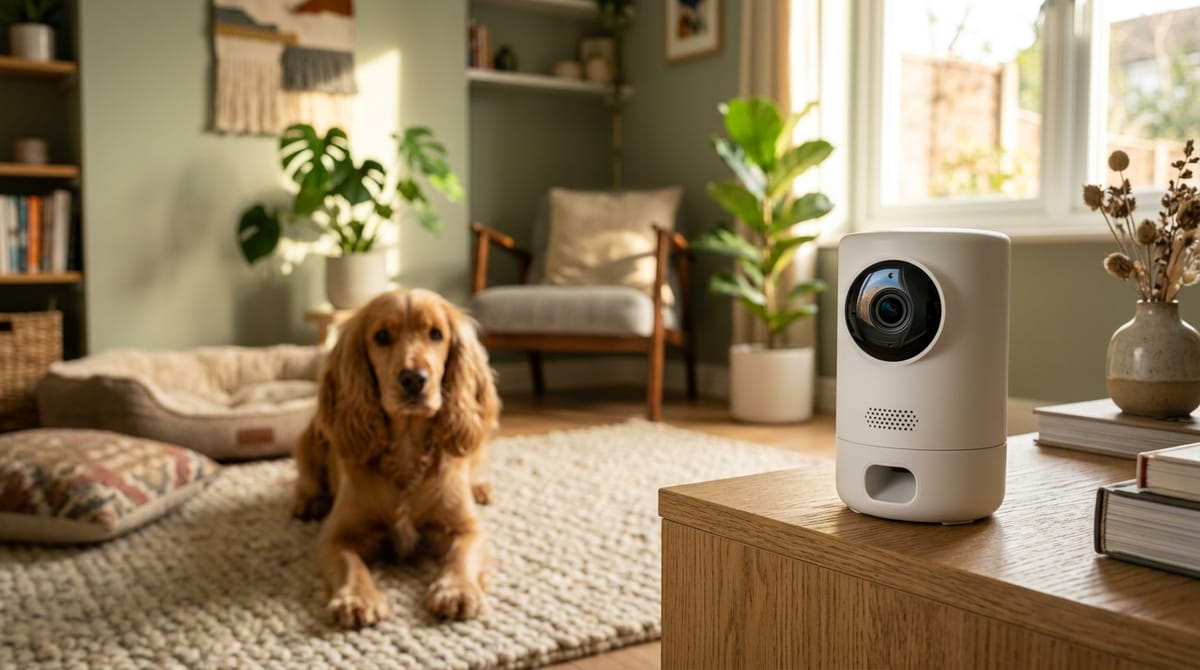
This comparison covers four pet cameras worth considering for UK households dealing with separation anxiety, holiday boarders, or dog-walker check-ins. The market splits into dedicated treat-launching pet cameras (Furbo, Petcube, Eufy) and repurposed general-purpose security cameras (Ring, Wyze imports). The first three justify their price by giving the owner a way to actively reward calm behaviour or interrupt barking from afar - the security-cam alternative is much cheaper but passive.
This guide is informed by spec sheets, independent reviews aggregated across CNN Underscored, Reviewed and Smart Bark UK, and 2026 UK pricing. We don't sell these cameras and have no ownership stake in any of the manufacturers. For owners separately weighing dog-friendly travel accommodation, see our dog-friendly UK attractions guide.
How do dog cameras actually help with separation anxiety?
A pet camera is not a treatment for separation anxiety - that requires desensitisation and counter-conditioning, ideally with a qualified behaviourist (the APBC directory is the standard UK starting point). What a camera does is give the owner three practical tools that make management easier:
- Diagnosis - most owners don't know what their dog actually does in the first 30-60 minutes alone. A camera reveals whether the dog settles, vocalises, paces, or destroys - which determines what intervention is needed.
- Reward delivery - the treat-launching cameras allow the owner to reward a settled dog from outside the home, reinforcing calm behaviour during the separation-tolerance training process.
- Voice intervention - 2-way audio can interrupt unwanted behaviour (counter-surfing, persistent barking) without the owner returning home, which itself can be a powerful reinforcer for anxiety-driven behaviour. Used sparingly - voice from a disembodied speaker can also distress anxious dogs.
The cameras compared here cluster into three price-and-feature bands: dedicated pet cameras with treat dispensers (£100-200), general-purpose security cameras repurposed for pet check-ins (£40-60), and the premium 360° rotation tier (£200+).
At a glance
All 4 options side by side.
| Furbo 360° Dog Camera | Petcube Bites 2 Lite | Ring Indoor Cam (Repurposed for Pets) | Eufy Pet Dog Camera D605 | |
|---|---|---|---|---|
| Price | See price | See price | See price | See price |
| Best for | Best for most owners willing to pay the subscription. | Best value pick. | Best for owners who only need to see the dog. | Best for owners who refuse subscriptions. |
| Review | Read review → | Read review → | Read review → | Read review → |
| Buy |
The picks in detail
Furbo 360° Dog Camera
Bottom line. Best for most owners willing to pay the subscription. The benchmark for category features, with the only true 360° tracking.
Pros
- Remote treat tossing with a sound cue dogs can learn to come running to
- 360° rotation and auto-tracking keep a moving dog in frame across a room
- Clear 1080p video with little lag, on Wi-Fi or mobile data
- Colour night vision that switches to black and white when the light is too low
- Live view, two-way audio, bark alerts, tracking and treat tossing work without a subscription
Cons
- Motion-triggered recording, video history and the smarter alerts need a paid Furbo Nanny plan
- Bark alerts fire on other loud household noises, not just barking
- Only small, dry, round treats toss reliably, so not for dogs on soft treats
- 2.4 GHz Wi-Fi only, with cloud storage and no local recording option
Petcube Bites 2 Lite
Bottom line. Best value pick. Most camera per pound, especially for owners doing longer trips who don't want to refill the hopper mid-stay.
Pros
- Remote treat tossing, with the throw distance set by how far you swipe, plus scheduled treats from the app
- 160° lens covers most of a room from a single spot
- Large 1.5 lb (about 680 g) treat container that lifts off and is dishwasher safe, with a low-treat sensor
- Live view, two-way audio and treat tossing work without a subscription
- Quick setup and an app that independent reviewers found easy to use
Cons
- Video history, clips and Smart Alerts need a Petcube Care subscription
- Connects to 2.4 GHz Wi-Fi only
- The dispenser is audible and can startle a nervous pet at first
- Tall, narrow plastic body can be knocked over by a lively pet unless wall-mounted
- Throws can land further than intended, and crumbly treats break up in the mechanism
More buying options (1)
- Petcube UK Check price View deal →
Ring Indoor Cam (Repurposed for Pets)
Bottom line. Best for owners who only need to see the dog. If you don't care about treats or pet-specific alerts, you don't need to pay for a dedicated pet camera.
Pros
- Compact, discreet camera that sits on a shelf or mounts to a wall
- Colour night vision for evening check-ins
- Two-way talk lets you speak to a pet from the app
- Physical privacy cover that cuts both video and microphone
- Simple app setup, and live view works without a subscription
Cons
- No local storage - saving clips and person alerts need a paid subscription
- No pan or tilt, so a pet can wander out of shot
- No pet-specific features such as treat tossing or bark alerts
- 2.4 GHz Wi-Fi only and the 1.9 m supplied cable limits placement
- Motion alerts can be frequent in a busy household, and pets set them off
Eufy Pet Dog Camera D605
Bottom line. Best for owners who refuse subscriptions. Genuinely full feature parity for ~£130 with zero monthly fees.
Pros
- Free local microSD storage (up to 128GB) - no subscription required for recordings
- Dog-specific AI smart alerts work without a paid tier
- Custom treat-dispensing schedule and remote launch included free
- Anker / Eufy support is well-established in the UK, faster than US-only brands
- Cheapest treat-dispensing camera with genuinely full feature parity
Cons
- Smaller treat capacity than Petcube - closer to Furbo's 30-treat range
- Field of view is narrower (~125°) than Petcube - dogs roam out of frame more easily
- No 360° rotation
- Eufy's cloud-tier security has been criticised in the past - local storage is the sensible default here
Which dog camera should I buy?
Four practical buying patterns cover most UK households.
You want a treat dispenser and refuse subscriptions → Eufy D605 (£130)
This is the most over-served camera on the market: paying once for everything the Furbo and Petcube put behind monthly fees. Smaller field of view than Petcube and no 360° rotation, but those are the only meaningful trade-offs.
You want the best of class and don't mind subscribing → Furbo 360° (£200)
The 360° rotation alone justifies the gap on highly mobile dogs; the dog-specific AI alerts are the most refined; the app is the most polished. Plan on £69/year for Dog Nanny to unlock the value.
You want maximum value and a long treat hopper → Petcube Bites 2 Lite (£110)
A 700g treat capacity is the standout. For separation periods longer than a couple of hours, refilling becomes the constraint that limits how much remote reinforcement is possible. The 160° wide angle is also genuinely useful in open-plan UK living rooms.
You only need to see the dog → Ring Indoor Cam (£50)
If diagnosis ("what does my dog do?") is the only goal and the dog is already settled enough that you won't need treat reinforcement, paying ~£50 instead of ~£200 is the honest answer. No category-leading pet camera adds enough value over a general-purpose security camera for owners who only need check-in viewing.
GDPR considerations for in-home pet cameras
UK pet cameras pick up audio and video that may include household members, cleaners, dog walkers, or visitors. The ICO's domestic CCTV guidance covers the rules: cameras operating purely within the boundaries of your own household are largely exempt from GDPR, but you should notify visitors who would reasonably expect privacy (cleaners, contractors, dog walkers) that the camera is recording, and avoid pointing audio recording into shared spaces with non-household members. Audio is the higher-risk axis - most cameras have a microphone disable option in app settings; use it when not actively needed.